A law office in St. Albert. A construction firm in Nisku. A medical clinic in Sherwood Park. These aren’t hypothetical targets — they’re the kinds of Alberta businesses that ransomware groups are actively going after right now.
Ransomware attacks on Canadian small and medium businesses increased by over 150% between 2023 and 2025. Alberta, with its dense concentration of energy, construction, legal, and healthcare businesses, sits squarely in the crosshairs. And unlike the large-scale breaches that make national headlines, most attacks on SMBs go unreported — because the businesses affected are too embarrassed, too small, or too overwhelmed to go public.
The average ransomware payment demanded from a Canadian SMB in 2025 was $285,000 CAD. Many businesses pay it. Many still don’t recover their data. And many never fully recover at all.
This isn’t a threat for “someday.” It’s happening right now, to businesses exactly like yours.
We’ve already covered how the Canvas hack exposed millions of records through a silent, automated attack — ransomware works the same way. And if your business is still on a reactive IT model, you’re already behind.
What Ransomware Actually Is (And How It Gets In)
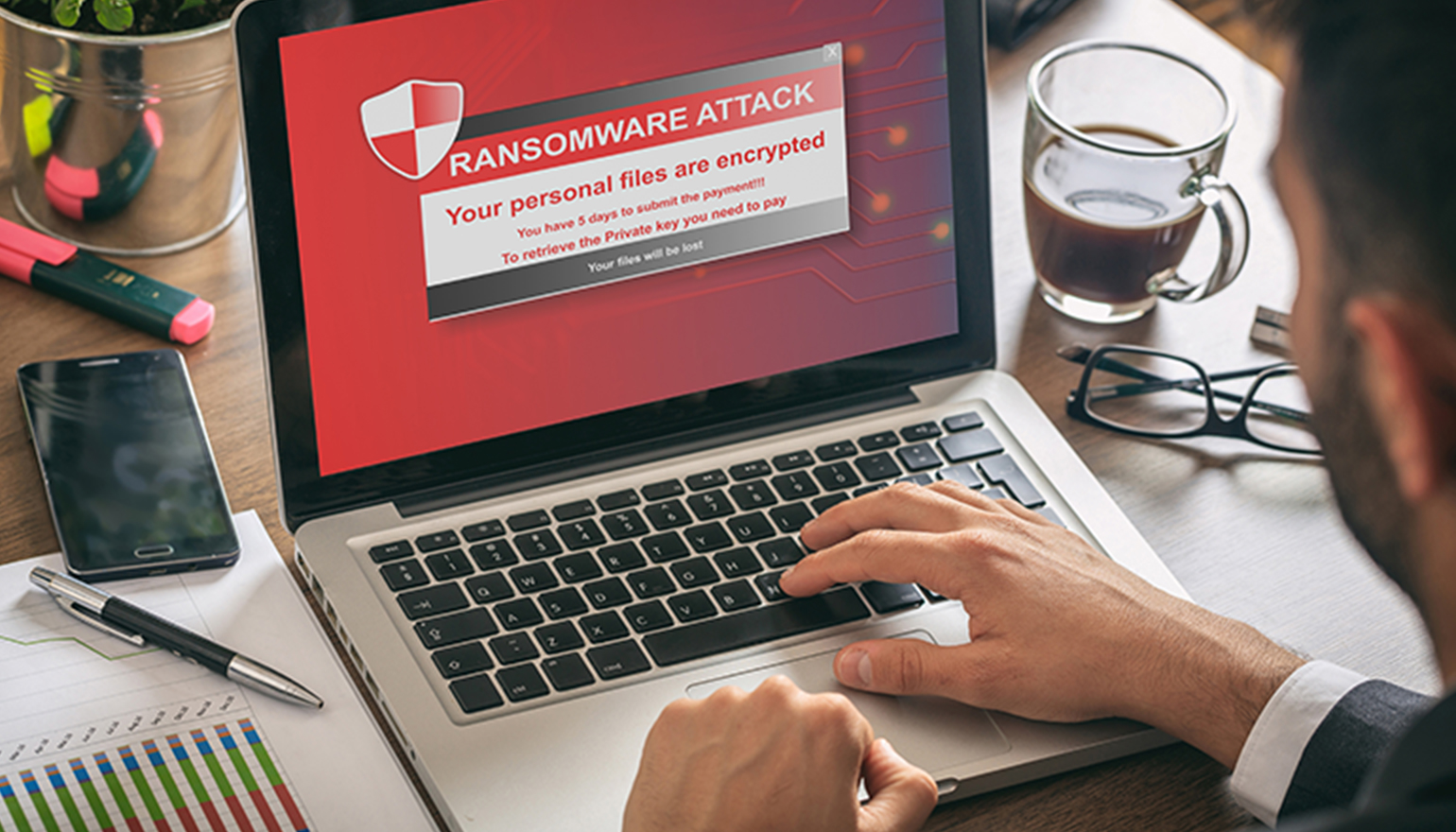
Ransomware is malicious software that encrypts your files — locking you out of everything from client records and financial data to emails and internal systems — and demands a payment in cryptocurrency to restore access.
The three most common ways ransomware gets into Edmonton businesses:
1. Phishing Emails
An employee receives an email that looks legitimate — a fake invoice, a courier notification, a message appearing to be from a supplier. They click a link or open an attachment. That single click installs the ransomware. It then quietly spreads across your network before activating.
2. Compromised Credentials
Attackers buy stolen username and password combinations on the dark web — often from previous data breaches at other companies. If your employees reuse passwords, or if MFA isn’t enabled, attackers walk straight into your systems using legitimate login credentials. Nobody even knows they’re in.
3. Unpatched Software Vulnerabilities
Outdated operating systems, unpatched applications, and old firmware contain known security holes that ransomware groups actively exploit. If your systems haven’t been updated recently, attackers already know exactly how to get in.
What Happens During a Ransomware Attack
Most business owners imagine a ransomware attack as a sudden, dramatic event. In reality, it typically unfolds in stages — and the most dangerous phase happens long before you know anything is wrong.
Stage 1 — Initial access: Attackers get in through one of the methods above. Your systems appear completely normal.
Stage 2 — Reconnaissance: Over days or even weeks, attackers quietly move through your network, identifying your most valuable data, locating your backups, and mapping your systems. You still have no idea.
Stage 3 — Backup deletion: Before activating the ransomware, attackers delete or encrypt your backups. This is why having backups alone isn’t enough — if they’re connected to your network, they get encrypted too.
Stage 4 — Encryption and ransom demand: Everything locks simultaneously. A ransom note appears on every screen. Your business has ground to a halt.
Stage 5 — The decision: Pay and hope you get your data back. Restore from offsite backups if you have them. Or rebuild from scratch — which for most SMBs takes weeks and costs more than the ransom.
The Real Cost of a Ransomware Attack on an Edmonton SMB
The ransom payment itself is often not the biggest cost. When you add up everything a ransomware attack actually costs an Alberta SMB, the numbers are devastating:
Downtime: The average ransomware recovery takes 21 days. For a 10-person Edmonton business, that’s potentially $50,000 to $150,000 in lost productivity and revenue.
Recovery costs: IT forensics, system rebuilding, data restoration — typically $15,000 to $50,000 even if you don’t pay the ransom.
Regulatory fines: If personal data was exposed, Alberta’s Personal Information Protection Act (PIPA) and federal PIPEDA may require breach notification — and non-compliance carries significant penalties.
Reputational damage: Clients who trusted you with their data may not after a breach. For law firms, medical clinics, and financial services businesses, this can be existential.
Cyber insurance premiums: After a claim, premiums typically double or triple at renewal — if you can get coverage at all.
The average total cost of a ransomware incident for a Canadian SMB is now over $3.4 million when all factors are accounted for. For most small businesses, that number is the end of the road.
7 Ransomware Protection Measures Every Edmonton Business Needs
The good news is that ransomware is largely preventable. Businesses that get hit are almost always missing one or more of these fundamental protections.
1. Multi-Factor Authentication (MFA) on Everything
Enable MFA on every account — Microsoft 365, email, remote access, banking, everything. MFA stops compromised credentials from being useful to attackers. Even if they have your password, they can’t get in without the second factor. This single step eliminates the majority of credential-based ransomware attacks.
2. Immutable Offsite Backups
Your backups must be stored offsite and air-gapped from your network — meaning attackers can’t reach them even if they fully compromise your environment. Backups should follow the 3-2-1 rule: three copies of data, on two different media types, with one stored offsite. GuidePost’s data recovery services are built around this exact model. Test your restore process quarterly — a backup you’ve never tested is a backup you can’t rely on.
3. Endpoint Detection and Response (EDR)
Traditional antivirus looks for known malware signatures. Modern ransomware is designed to evade signature-based detection. EDR monitors behaviour instead — flagging unusual activity like a process suddenly encrypting hundreds of files at 2 AM — and can automatically isolate an infected device before the ransomware spreads.
4. Email Filtering and Anti-Phishing Controls
Since phishing is the most common ransomware delivery method, your email environment needs layered protection: spam filtering, malicious link scanning, attachment sandboxing, and impersonation detection. Microsoft 365’s built-in protections are a good start but need proper configuration — out-of-the-box settings leave significant gaps.
5. Patch Management
Every unpatched vulnerability is an open door. A managed IT provider should be applying security patches to your operating systems, applications, and firmware on a regular schedule — not waiting until something breaks. Critical patches should be applied within 24 to 48 hours of release.
6. Network Segmentation
If ransomware gets onto one device, network segmentation limits how far it can spread. By dividing your network into isolated segments — separating servers from workstations, isolating point-of-sale systems, keeping guest WiFi separate from internal systems — you contain the blast radius of any infection. This is a core part of proper network design.
7. Employee Security Awareness Training
Your team is your first and last line of defence against phishing. Regular training on how to identify suspicious emails, verify unexpected requests, and report potential threats dramatically reduces your exposure. One well-trained employee spotting a phishing email before clicking is worth more than thousands of dollars in security software.
What to Do If You’re Hit Right Now
If you suspect ransomware is active on your network:
- Disconnect immediately — unplug affected devices from the network. Do not shut them down — forensic evidence is preserved while powered on.
- Call your IT provider — do not attempt to negotiate with attackers or pay the ransom without professional guidance.
- Contact your cyber insurance provider — if you have cyber insurance, notify them immediately as most policies have time-sensitive reporting requirements.
- Do not pay without expert advice — paying the ransom does not guarantee data recovery and may expose you to legal liability.
- Notify affected parties — if personal data was compromised, PIPA may require you to notify affected individuals and the Office of the Information and Privacy Commissioner of Alberta.
Is Your Edmonton Business Protected?
If you can’t confidently answer yes to all of these, you have gaps that need to be addressed:
- MFA is enabled on every account in your organization
- Your backups are stored offsite and tested regularly
- Your systems are patched and up to date
- Your team has received security awareness training in the last 12 months
- EDR is running on every device that touches your network
- You have a documented incident response plan
Frequently Asked Questions
How do I know if my business has already been compromised? Many ransomware attacks involve weeks of silent reconnaissance before activation. Signs include unusual network activity, unexpected account lockouts, slow system performance with no clear cause, or security software being disabled. A professional security assessment can identify indicators of compromise.
Should I pay the ransom? The FBI, RCMP, and cybersecurity experts generally advise against paying. Payment doesn’t guarantee data recovery — many businesses pay and still lose data. It also marks you as a paying target, increasing the likelihood of future attacks. The best protection is never being in a position where paying is the only option.
Does cyber insurance cover ransomware? Many cyber insurance policies do cover ransomware, but coverage requirements are tightening significantly. Insurers now commonly require MFA, regular backups, and documented security policies as conditions of coverage. Businesses without these controls may find their claims denied.
How much does ransomware protection cost for a small Edmonton business? A comprehensive ransomware protection stack — including EDR, email filtering, backup management, and patch management — typically costs $50 to $150 per user per month as part of a managed IT services plan. That’s a fraction of the cost of a single ransomware incident.
Don’t Wait Until It Happens to Your Business
Ransomware protection isn’t a luxury for large enterprises. In 2026, it’s a basic requirement for any Edmonton or Alberta business that wants to stay operational. And if you’ve already made the move to the cloud, your cloud environment needs to be properly secured too — migration alone doesn’t protect you.
GuidePost Technologies provides comprehensive cybersecurity services for Edmonton and Sherwood Park businesses — including ransomware protection, 24/7 monitoring, endpoint security, backup management, and employee training. We’ve helped businesses across Alberta identify their gaps and close them before attackers find them first.
Explore our Cybersecurity Services →
Or call us at 780-851-5000 to book a free cybersecurity assessment. We’ll identify your gaps, explain your risks clearly, and give you a straightforward plan to fix them — no jargon, no pressure.
GuidePost Technologies — Managed IT Services, Cybersecurity, Cloud Computing, and Network Support for Edmonton and Alberta Businesses.